
Cape Cod Beachcombing: Uncovering the Bay’s Hidden Nurseries
A spring stroll at historic First Encounter Beach reveals the leathery “purses,” parchment “necklaces,” and “jackknives” left behind by the winter tides.

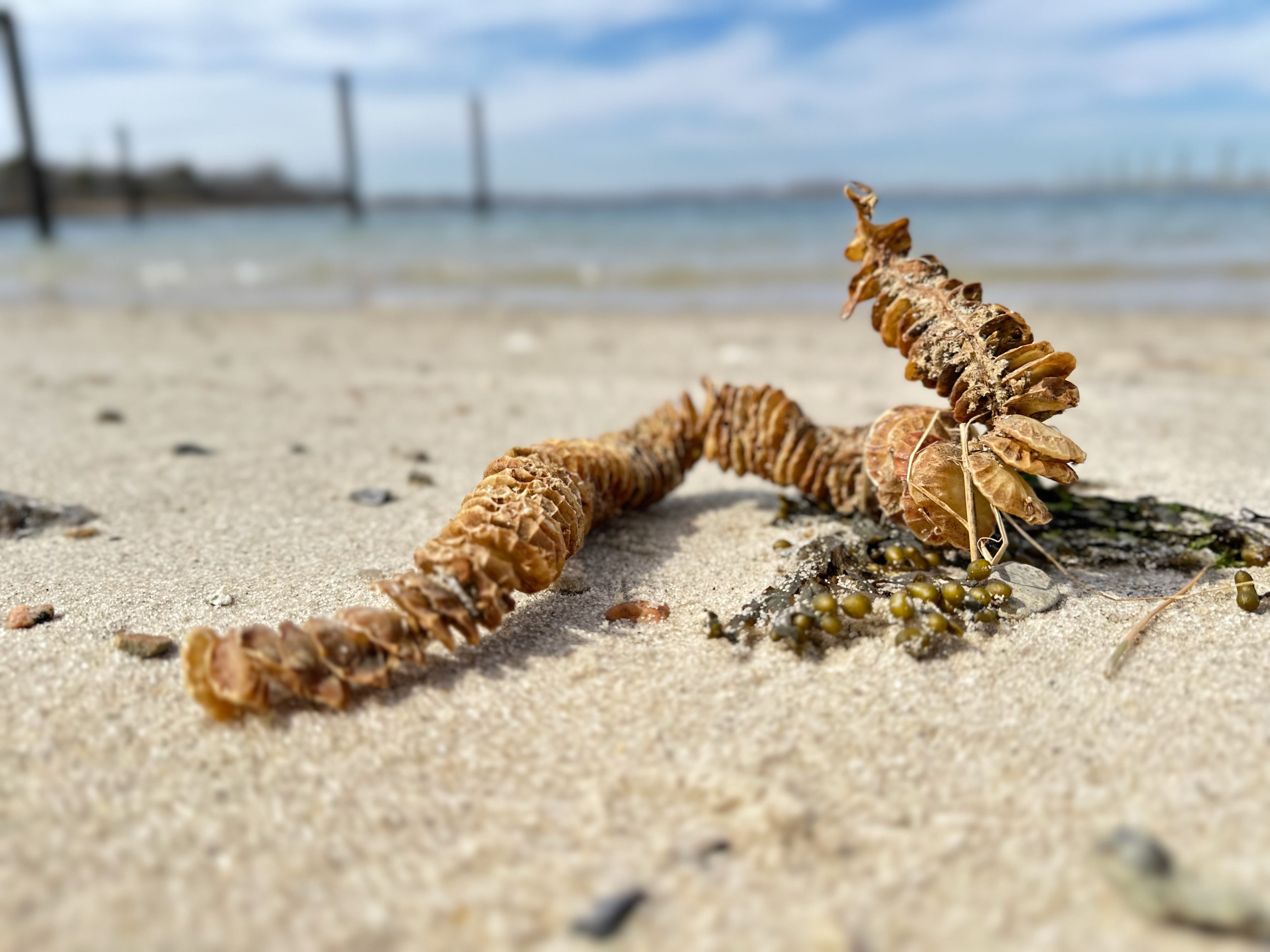
There is a brief, quiet window in early spring when the Cape Cod coastline belongs almost exclusively to the hearty locals and the shifting tides. The air is crisp, the light on the bay is luminous, and after the churning of winter storms, the “wrack line”—that tangle of debris left by the high tide—is usually rich with treasure.
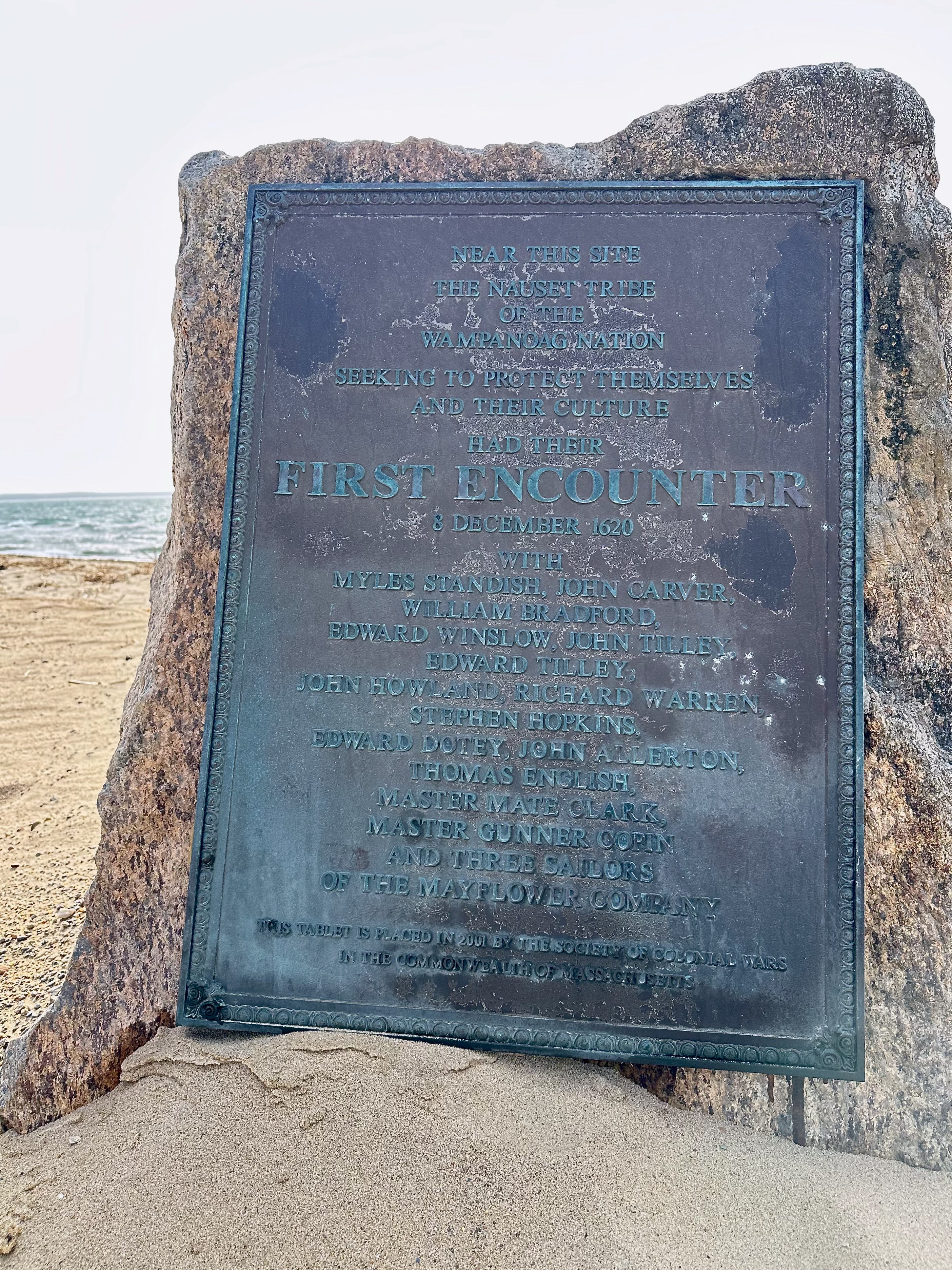
Whenever I walk First Encounter Beach in Eastham, I get chills thinking that I am stepping in the same sand where Myles Standish first met the Nauset Tribe of the Wampanoag nation in 1620. First Encounter sits right at the northern tail end of the massive tidal flats that spread from Brewster and Skaket Beach.
At low tide, as the ocean revealed its treasures, I spotted a familiar, leathery shape tangling with the dried sea lettuce. It was a Whelk egg case, often called a “mermaid’s necklace.”
There is something hypnotic about how these parchment-like discs are strung together in a long, spiraling chain. Each of the individual “coins” in this string once held dozens of tiny, developing young whelks.
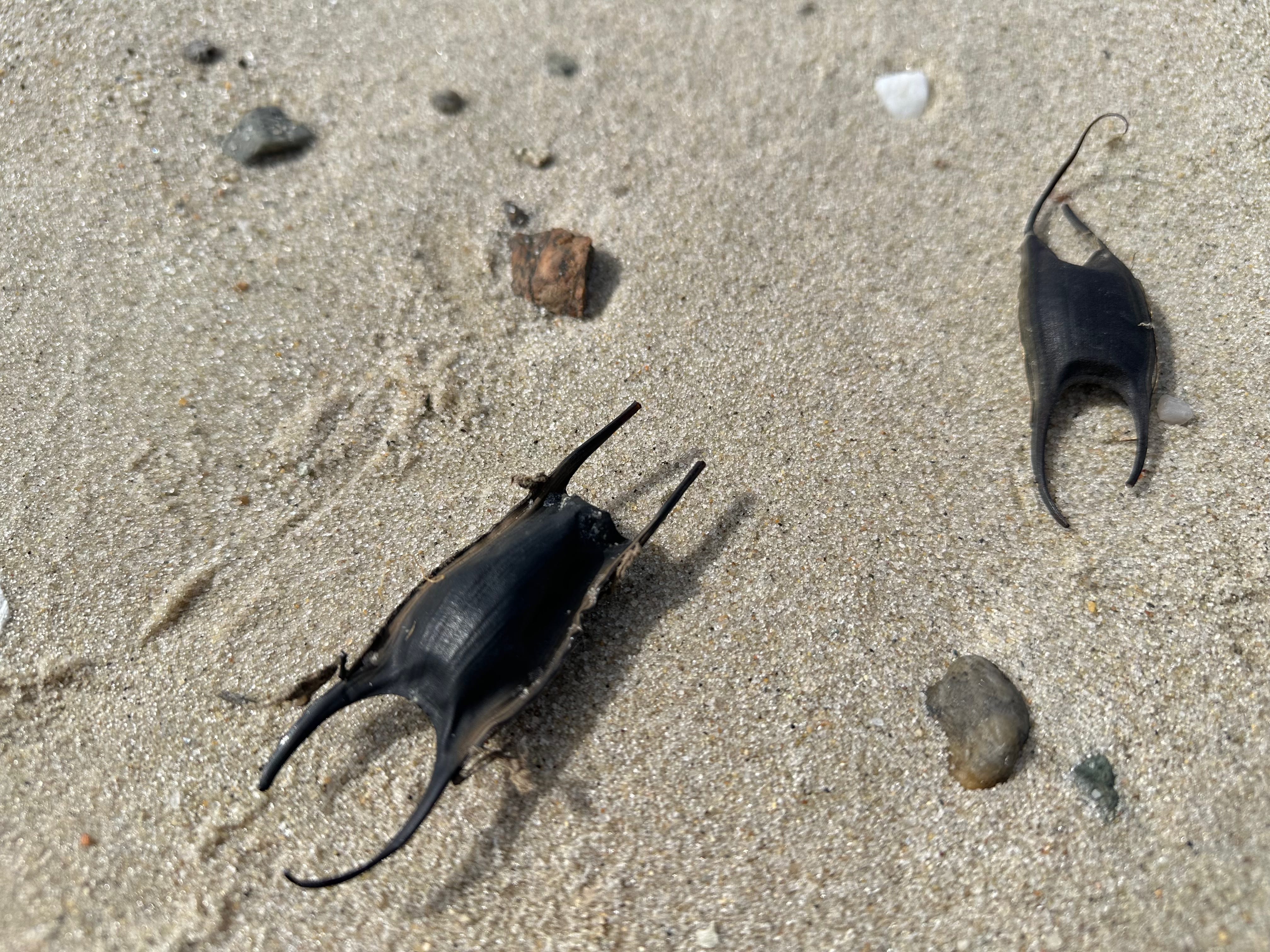
While the necklace is striking, it’s not the only underwater nursery that washes ashore. If you keep digging through the dried seaweed, you might spot the Skate egg case, known as a “mermaid’s purse.” Unlike the spiraling whelk case, the skate purse is tough, rectangular, and dark, with four pointed “horns” that once anchored it to the seafloor.
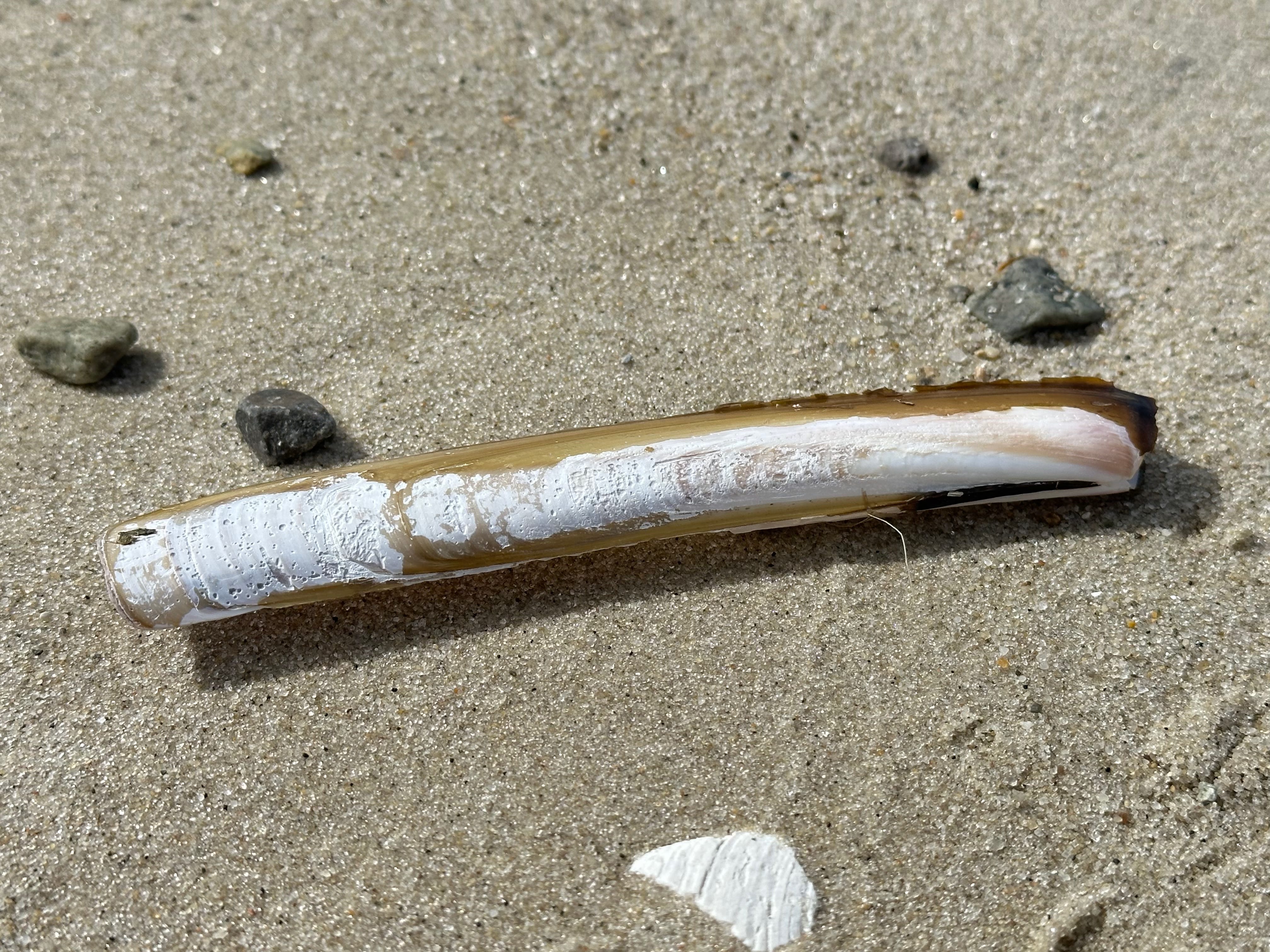
Nearby, I also came across a Razor Clam (or Atlantic Jackknife). These shells are so aptly named—they look exactly like an old-fashioned straight razor. While they are a delicacy in many parts of the world, they are famously difficult to catch alive because they can burrow into the sand faster than a human can dig! Seeing one intact on the beach is a reminder of just how sharp and streamlined life in the intertidal zone has to be.
A Quick Field Guide: Know What You Found
Next time you are beachcombing during these quiet spring days, here is how to identify your finds:
The Snail Spiral (Mermaid’s Necklace): These belong to whelk sea snails. If you see tiny, pin-sized holes in the discs, the miniature snails have already “hatched” and moved out into the bay.
The Skate Pouch (Mermaid’s Purse): These are the protective nurseries of skates (cartilaginous fish related to rays). Each case typically contains a single embryo.
The Jackknife (Razor Clam): A long, thin bivalve that uses a powerful muscular “foot” to disappear into the mud in seconds.
Want to find more spots like First Encounter? My new book, Cape Cod and the Islands Family Fun Guide, hits shelves this May! It’s your ultimate roadmap to creating unforgettable memories with the people who matter most. Pre-order now and let’s go exploring!
Where have you had your best beachcombing success this spring? Let us know in the comments!
Great stuff! Thanks for sharing.
These three treasures were a delight of my childhood, the early years spent at Campground Beach in North Eastham. The call of waves took me to Nauset Light Beach as I aged, but the pail-collecting of mermaid’s purses and necklaces never left my memory and the razor clams still make me wince as stepping on them could slice feet easily. Thanks for the reminder!